If you've read a dozen articles about getting back behind the wheel after a Florida DUI, you've probably found them blurring together the administrative license suspension, the criminal court suspension, and the ignition interlock device requirement as though they're all one tangled process. They're not. Florida's DUI system runs on two separate legal tracks - a civil administrative track managed by the Florida Department of Highway Safety and Motor Vehicles, and a criminal track handled by the courts. Each track suspends your license independently. Each track can impose its own ignition interlock requirement. Missing that distinction is the reason drivers show up at the wrong office, file incomplete paperwork, or get blindsided by a requirement they never knew existed. This guide separates those tracks clearly and walks through every step that sits between a DUI arrest and a working hardship license.
The Administrative Suspension vs. the Criminal Suspension: What Each One Means for Your License
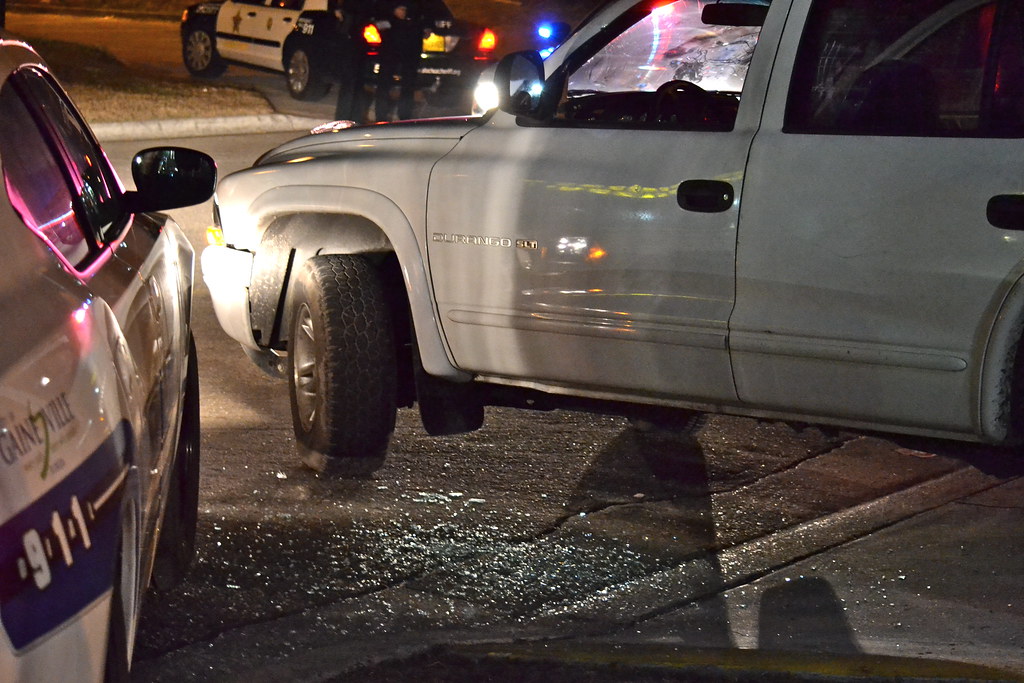
The administrative suspension happens at the roadside the night of your arrest. When a Florida officer arrests you for DUI and you either blow a BAC at or above 0.08% or refuse the breath test entirely, your license is taken on the spot and you receive a temporary driving permit valid for a short window. This suspension is civil, not criminal. It is imposed by FLHSMV under Florida Statute § 322.2601 and takes effect regardless of what happens later in criminal court. Even if the state drops your DUI charge entirely, the administrative suspension may still stand unless you successfully challenge it at a formal review hearing within ten days of your arrest.
The criminal suspension is a separate matter. It follows a conviction in county court and is imposed as part of your sentence. If you are convicted of DUI, the court suspends your license for a period set by statute based on your offense number and the circumstances of the arrest. You must satisfy the requirements for both suspensions to get fully back on the road. Reinstating from one does not reinstate you from the other. Most law firm pages treat "the suspension" as singular. There are two of them, potentially running at the same time, with different waiting periods and different reinstatement conditions.
Hard Suspension Periods: How Long You Must Wait Before You Can Even Apply
Neither suspension lets you apply for a hardship license the moment it takes effect. Florida imposes mandatory hard suspension periods - windows during which you cannot drive and cannot apply for any restricted license, full stop. The length of the hard period depends on which administrative suspension you're under.
- A first-offense breath test failure (BAC at or above 0.08%) carries a 30-day hard suspension before you can apply for a hardship license.
- A first-offense test refusal extends that hard period to 90 days.
- A second or subsequent test refusal triggers an 18-month administrative suspension under § 322.2601, and you are not eligible for any hardship license for the first full year of that suspension.
These waiting periods run from the date of the administrative suspension, not from the date of your criminal conviction. If your criminal case takes six months to resolve and you had a first-offense refusal, you may already be past the 90-day mark by the time a judge enters a verdict. Conversely, a quick plea deal does not shorten the administrative hard period at all. You cannot pay your way out of it, argue around it, or find a procedural shortcut. It must simply run its course before BAR will hear your application.
The Two Separate IID Mandates: Court Order (§ 316.193) vs. DHSMV Power (§ 322.2715) - and Why the Distinction Matters
This is where nearly every independent guide falls short. Florida has two entirely separate legal bases for requiring an ignition interlock device, and they come from two different authorities with two different triggers.
The first source is the criminal court order under § 316.193. When you are convicted of DUI, the court can - and in certain circumstances must - order you to install an IID as part of your sentence. For a first DUI where BAC was at or above 0.15% or where a minor was present in the vehicle, Florida law requires the court to impose an IID for a minimum continuous period. For a standard first DUI with no aggravating factors, the court has discretion but is not obligated to order one.
The second source is FLHSMV's independent authority under § 322.2715. This statute gives FLHSMV the power to require an IID as a condition of issuing any hardship or permanent license to a DUI convict - completely separate from whatever the court ordered or didn't order. Even for a plain first DUI where BAC was below 0.15% and no minor was present, and where the court issued no IID order at all, the Bureau of Administrative Reviews can still impose an IID requirement at your hardship hearing before it will issue your restricted license.
The practical consequence is significant. You cannot assume that because the judge did not order an interlock, you don't need one to get your hardship license. FLHSMV has its own authority under § 322.2715 and exercises it independently. Drivers who walk into the BAR office without an interlock installed - because they read that their first DUI "didn't require one" - often find they must reschedule their hearing and start the installation process before they can proceed. Understanding that both mandates exist, and that they come from different sources, is the single biggest gap in most DUI guides.
Step-by-Step: How to Apply for a Florida Hardship License at the Bureau of Administrative Reviews
The Bureau of Administrative Reviews is the FLHSMV office that handles hardship license applications. The courts do not grant hardship licenses. Standard DMV service centers do not grant them either. BAR is the correct office, and the process works as follows.
Enroll in a state-approved DUI school first. You must be enrolled before the hardship hearing. Enrollment generates an FR-26 certificate, which is the document you bring to the hearing. You do not need to complete the full program before applying - enrollment is sufficient - but you must be actively enrolled and have the FR-26 in hand.
Get FR-44 insurance in place. This is covered in the next section, but FR-44 coverage must be on file with FLHSMV before your hardship license can be issued. Your insurance provider files the certificate directly with the state. Confirm the filing has been received before you attend the hearing.
Address the IID requirement before or during this process. If the court ordered an IID, you'll need proof of installation from one of Florida's approved providers. If the court did not order one, understand that the BAR hearing officer may impose one under § 322.2715. Going in prepared - having already researched providers and knowing what installation requires - prevents delays if the requirement comes at you for the first time at the hearing.
File for the hearing at BAR. BAR charges a hearing application fee - check flhsmv.gov for the current amount. First-offense DUI drivers in most circumstances can attend an informal walk-in review rather than scheduling a formal appointment. The walk-in process is faster and more flexible.
Attend the hearing with your full document set. Bring the FR-26 DUI school enrollment certificate, your FR-44 insurance proof, and IID installation documentation if applicable. The hearing officer confirms your hard suspension period has passed, reviews your documents, and issues or denies the restricted license on the spot if everything is in order.
Second-offense applicants must schedule a formal hearing. This is a distinction almost no general guide mentions. Florida requires a scheduled formal administrative review at BAR for second-offense DUI convictions - there is no walk-in option. You must call ahead and book an appointment. Showing up without one means being turned away and losing more time on an already long road back.
FR-44 Insurance: The Requirement That Catches People Off Guard
Most DUI guides - including some from attorneys who should know better - refer to Florida's post-DUI insurance requirement as "SR-22." That is wrong. Florida requires an FR-44 certificate after a DUI conviction, and the difference matters.
An SR-22 is a certificate that simply confirms you carry the state's standard minimum liability coverage. An FR-44 is a different form altogether, and it requires you to carry double the state minimum liability limits across bodily injury per person, bodily injury per accident, and property damage. Check flhsmv.gov for the current required coverage minimums, as these figures are set by statute. Your insurer needs to know you are filing for an FR-44, not an SR-22 - the two are not interchangeable and carriers handle them differently.
FR-44 coverage is substantially more expensive than standard auto insurance. Some carriers do not offer it at all, which means you may need to shop for a new insurer. The filing must be received and confirmed in the FLHSMV system before a hardship license can be issued. Bringing SR-22 documentation to your BAR hearing will not satisfy the requirement - the hearing officer will tell you to come back when you have the correct filing.
If your FR-44 policy lapses at any point during the required filing period - even for a single day - FLHSMV is notified automatically and your license is suspended again. Keep the policy active and do not let it lapse even briefly. Set payment reminders well before due dates.
What Your Hardship License Lets You Do - and What Gets You Arrested
A Florida hardship license is not a regular license with minor conditions attached. It is a restricted permit that authorizes driving only within specific categories. Those categories are: travel to and from employment, travel to and from school, travel for medical appointments, travel to and from church, and travel to and from ignition interlock service appointments.
Driving outside those categories on a hardship license is not a traffic infraction. It is a criminal offense under Florida Statute § 322.38 - driving on a suspended license. That means an arrest, not a ticket. A single errand that doesn't fit the permitted categories - a grocery run on the way home from work, driving a friend somewhere, a trip to a restaurant - can result in criminal charges that make your existing DUI situation substantially worse. A new criminal charge while on probation for DUI is not a problem you want to create.
Keep a written record of every trip you make while holding a hardship license. Note the date, destination, and which permitted category applies. If your driving is ever questioned - by a traffic stop, a probation officer, or through your IID data log - that documentation supports your account. Treat the permitted categories as a hard boundary, not a general guideline.
How Offense Count Changes the Rules: First, Second, Third, Fourth+ DUI Compared
Florida's IID requirements and hardship eligibility change at each offense level, and the changes are not minor adjustments - they're substantial increases in both duration and restriction.
For a first DUI with BAC below 0.15% and no minor in the vehicle, the court has no mandatory IID obligation, but FLHSMV retains authority under § 322.2715 to impose one at the BAR hearing. The administrative hard suspension before any hardship application is 30 days for a breath test failure and 90 days for a refusal.
For a first DUI with BAC at or above 0.15% or with a minor present, the court is required to order an IID for a minimum continuous period. The IID requirement is mandatory from the conviction forward, not just as a condition of the hardship license. Confirm the current mandatory minimums with your attorney or at flhsmv.gov.
For a second DUI conviction, the mandatory IID period is longer. It increases further if BAC was at or above 0.15% or a minor was present. The BAR hearing must be formally scheduled in advance - the walk-in option is not available. The criminal suspension and overall reinstatement timeline are both significantly extended compared to a first offense.
For a third DUI conviction, the mandatory IID requirement runs for a minimum of two continuous years. The path back to unrestricted driving is long, and the requirements at each stage are more stringent.
For a fourth or subsequent DUI conviction, hardship eligibility is sharply limited. If a restricted license is available at all, it is issued as a Business Purpose Only permit - authorized strictly for employment-related driving. The applicant must demonstrate active employment to qualify. The IID requirement runs for a minimum of five years. Many fourth-offense convictions do not qualify for a hardship license at all, depending on the timing and classification of prior convictions.
Your IID Data Log: Who Sees It and What Can Happen If Something Goes Wrong
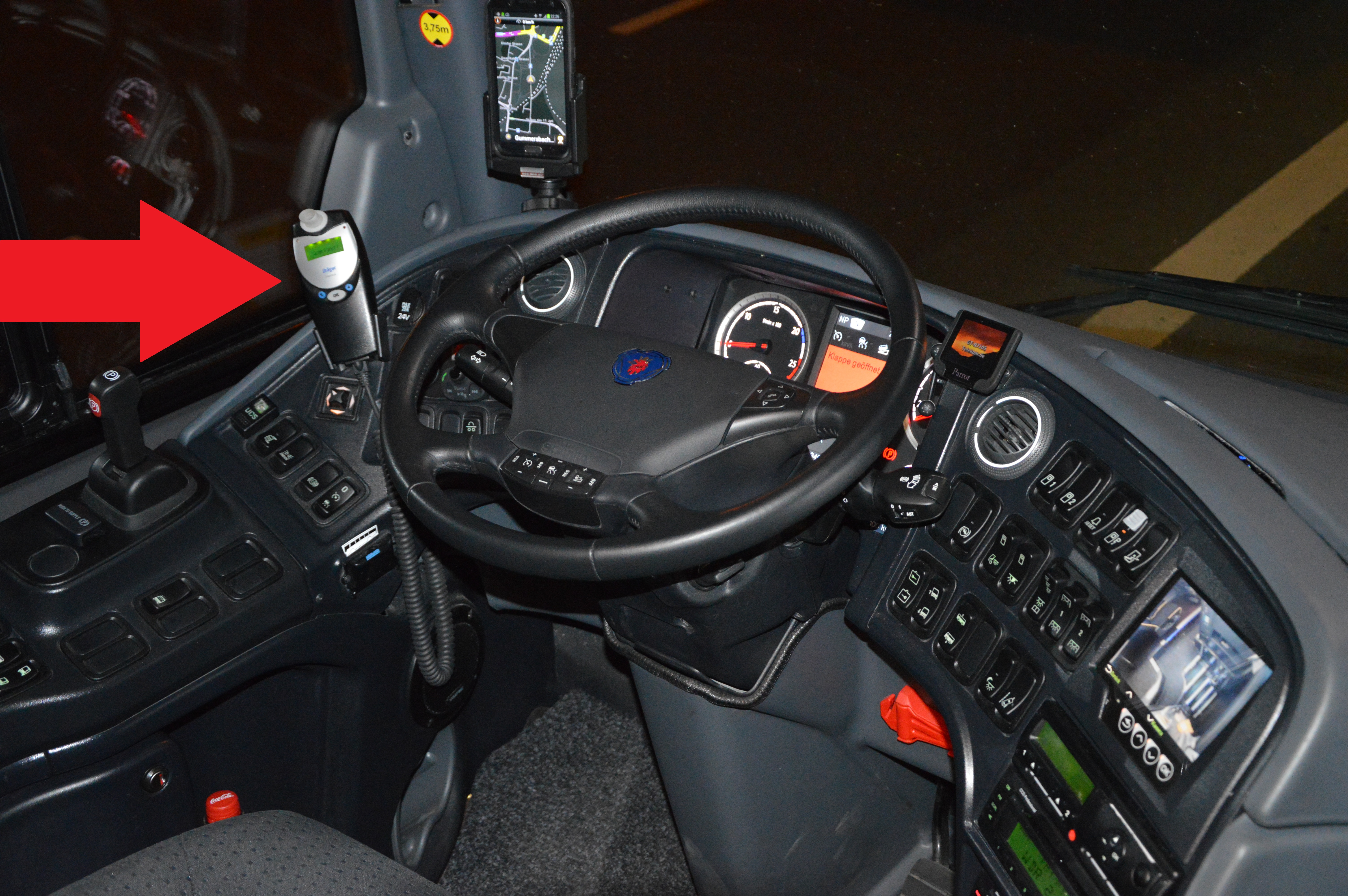
The ignition interlock device in your vehicle is a monitoring system, not just a physical barrier to starting the car. Florida's approved IID providers are required to transmit your breath-test logs, rolling-retest records, and GPS data to FLHSMV at each mandatory monthly calibration visit. The data goes to the state automatically and is reviewed as part of your IID monitoring period.
The data log captures every startup test and result, every rolling retest while driving, any failed attempts, any event the device flags as a possible tampering attempt, and the GPS location tied to each test. FLHSMV can see where you were when you tested, how you tested, and how many times you tested each day.
That data can also be subpoenaed. If a prosecutor or probation officer suspects a violation - a failed breath test, a suspected circumvention attempt, or a pattern of driving activity that doesn't match your permitted hardship license categories - they can pull the full log from the provider. A rolling retest failure or GPS data placing you at locations inconsistent with employment, school, church, or medical travel can trigger a probation violation hearing. Probation violation consequences are often more serious than additional traffic charges, and they are handled by the criminal court, not the DMV.
The monthly calibration appointment is mandatory. Missing it is itself a reportable compliance event. Do not treat it as optional paperwork that can slide by a few days.
Florida currently has seven FLHSMV-approved IID providers operating under Florida Administrative Code 15A-9.007 and NHTSA standards: Intoxalock, Smart Start, LifeSafer, ALCOLOCK, Guardian Interlock, Draeger (operating as Florida Interlock Inc.), and Sens-O-Lock. All of them transmit data to the state. Before signing an installation contract, compare service center locations near your home and workplace. If the nearest calibration location for a given provider is inconvenient, a missed appointment becomes more likely - and a missed appointment is a problem that shows up in your compliance record, not just your calendar.